Short answer
Babka began in Eastern Europe as a yeast cake, the name meaning grandmother. The tall fluted Polish babka and the swirled loaf are two related versions, and the swirled chocolate loaf became widely known in American bakeries, where many still sell it seasonally.
Babka origins lie in Eastern Europe, where the rich yeast cake began and where its name means grandmother in Polish and related languages. Two main forms exist: the tall, fluted Polish and Ukrainian babka baked for seasonal tables, and the swirled, twisted loaf that became familiar in American bakeries. Both are related, and their history overlaps.
What are the origins of babka?
Babka originated in Poland, Ukraine and neighboring parts of Eastern Europe as a sweet, enriched yeast cake. The details of the earliest recipes are not firmly documented, so the origins are usually described in general terms.
Cooks made babka from flour, eggs, butter, sugar and yeast, often adding raisins, citrus zest and almonds. The cake was a festive bake, because eggs and butter were costly. Over time, regional versions developed, and the recipe traveled with emigrants to the United States.
What does the word babka mean?
Babka is a diminutive of baba, the Slavic word for grandmother or old woman. The name is the same in Polish and Ukrainian and similar in other Slavic languages.
One common explanation is that the tall, fluted cake looks like the skirts of an old woman, and another links the name to a grandmother’s baking. These are traditional stories rather than documented facts, so treat them as folklore.
What is the Polish Easter babka?
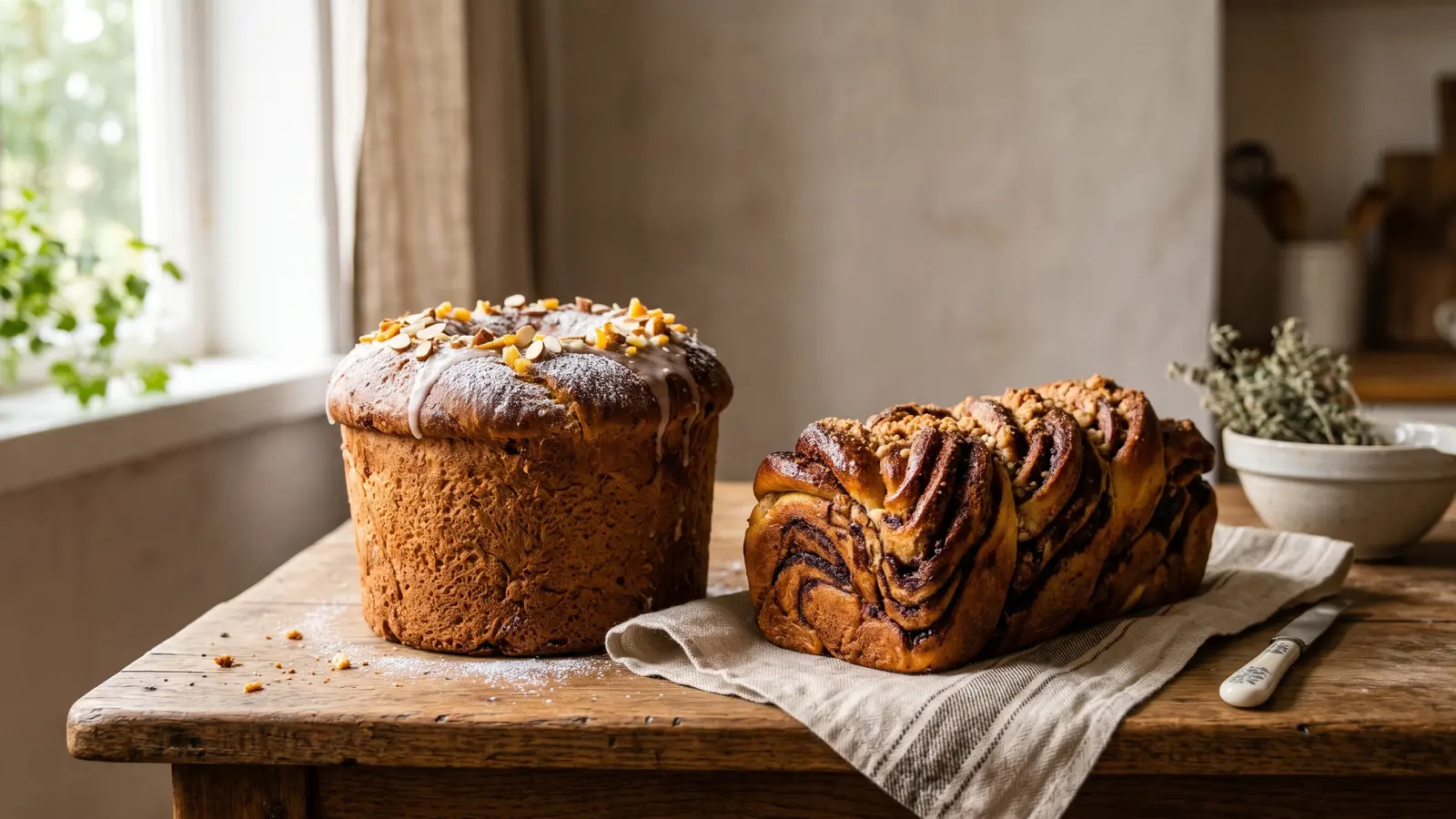
The Polish Easter babka, called babka wielkanocna, is a tall, round or fluted yeast cake baked as part of a spring holiday table. It is typically studded with raisins, flavored with citrus and finished with icing or powdered sugar.
The cake is baked in a tall fluted tin and is airy and rich. It is a seasonal specialty and is related to the Russian kulich and the Italian panettone, which are also tall, enriched breads. The Polish babka is a cake in loaf form, where the swirled version is a rolled bread.
How is the swirled babka different from the tall babka?
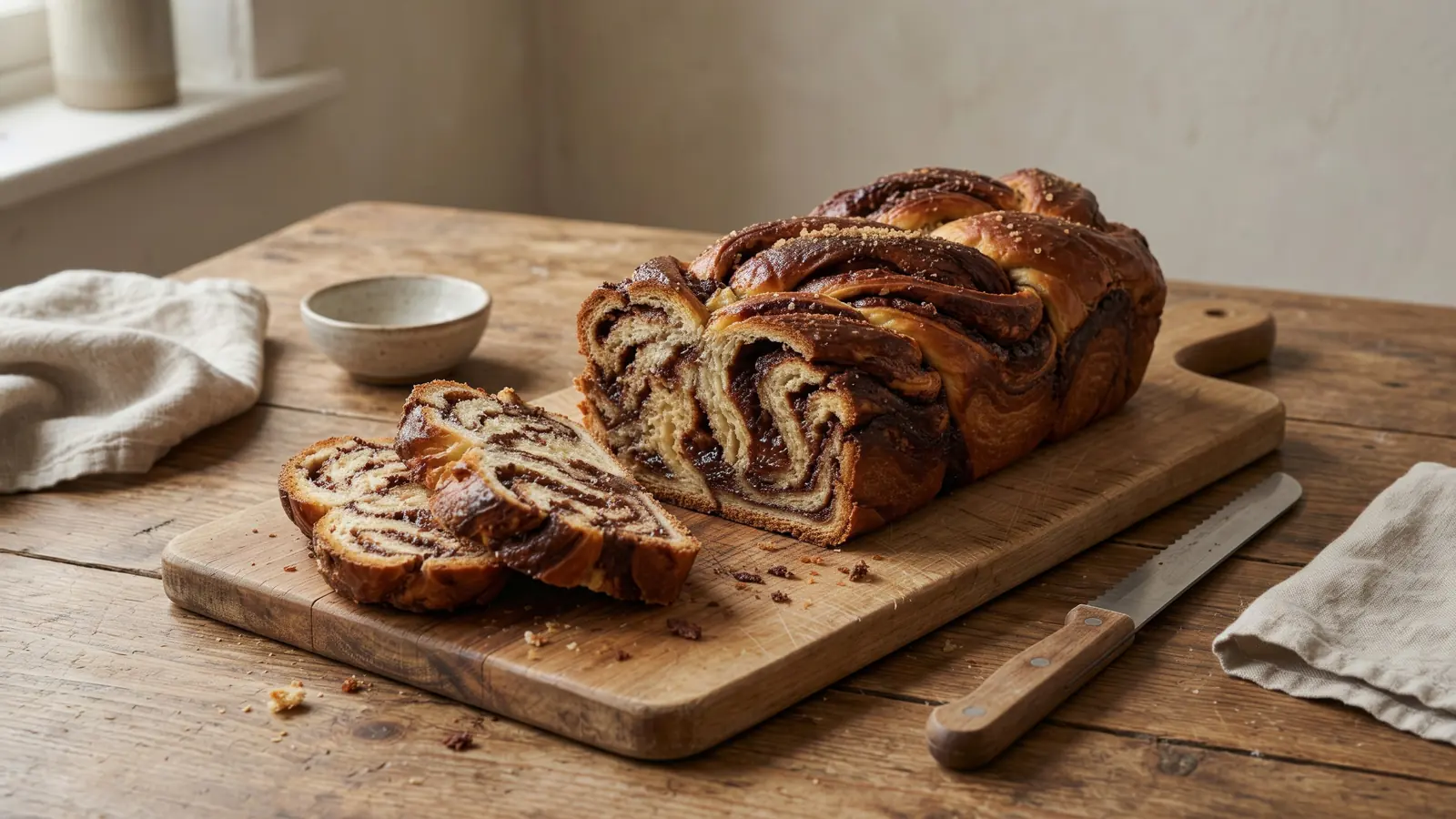
The swirled babka is a rolled and twisted loaf with a filling, while the tall babka is a fluted cake without a visible swirl. They share a name and an enriched dough but differ in shape and finish.
| Feature | Tall Polish babka | Swirled babka loaf |
|---|---|---|
| Shape | Tall, fluted | Twisted, loaf pan |
| Filling | Raisins, citrus in the dough | Chocolate, cinnamon or cheese rolled in |
| Finish | Icing or sugar | Syrup glaze |
| Typical time | Spring holiday table | Bakeries year-round or seasonally |
| Texture | Airy cake | Rich, layered bread |
How did the swirled babka spread to the United States?
Eastern European Jewish bakers brought the swirled babka to American cities, where bakeries sold chocolate and cinnamon versions to a wide audience. The loaf became a staple in mid-Atlantic and New York bakeries and later spread nationally.
Baking and selling traditions grew through immigrant neighborhoods in cities such as New York and Philadelphia. Exact dates and bakeries are not firmly documented in a single account, so the history is told in broad strokes.
What is the link between babka, kulich and panettone?
Babka, kulich and panettone are tall, enriched yeast breads from different European traditions that share a method: a rich dough of eggs, butter and sugar, raised slowly. They are cousins by technique, not copies of one recipe.
| Bread | Region | Typical features |
|---|---|---|
| Polish babka | Poland, Ukraine | Fluted tin, raisins, citrus |
| Kulich | Russia and neighbors | Tall cylinder, white icing |
| Panettone | Milan, Italy | Dome, candied fruit, raisins |
| Swirled babka | Eastern Europe, then the United States | Twisted loaf with filling |
Historians of food rarely agree on which of these traditions influenced the others, so the relationship is best described as family resemblance.
Why did the swirled loaf become so closely tied to chocolate?
Chocolate was widely available and loved in American bakeries, so chocolate became the most popular filling for the swirled loaf. Earlier fillings in Eastern Europe were more often cinnamon, cheese, nuts or poppy seeds.
American bakers also favored the loaf pan, which turned a regional bread into a product easy to slice, wrap and sell. The details of who first sold a chocolate version are not firmly documented.
What fillings do bakeries use in babka?
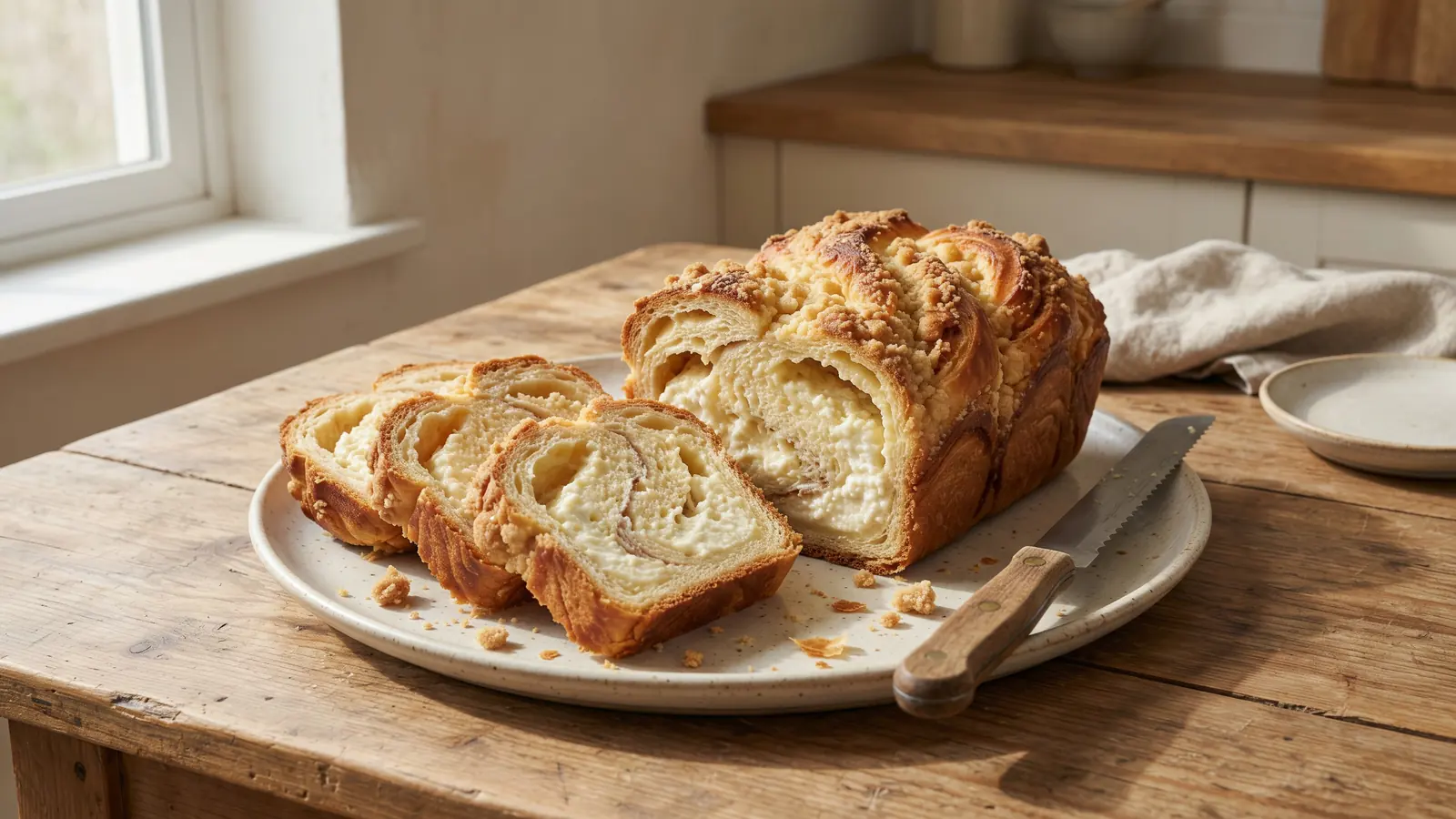
Bakery babka is commonly filled with chocolate, cinnamon or sweet cheese. Other fillings include nuts, poppy seed and fruit preserves.
- Chocolate: the most popular filling in the United States.
- Cinnamon: butter, brown sugar and cinnamon.
- Cheese: sweetened farmer or cream cheese.
- Poppy seed: a traditional Eastern European filling.
How is babka eaten?
Babka is eaten sliced, plain or lightly toasted, usually with coffee or tea. The swirled loaf is cut across the twist into thick slices, and the tall babka is cut like a cake.
Toasting a slice in a dry pan or a hot oven crisps the edges and softens the filling. Some people eat the end pieces first, because the crust holds the most syrup glaze. Leftover slices are also used for bread puddings and French toast, because the enriched crumb soaks up custard well and the swirl stays visible after cooking.
How do American bakeries treat babka as a seasonal item?
Many bakeries make babka in limited runs because of the long rise and the labor in rolling and twisting. Some sell it all year and some only at holidays.
Stock’s Bakery in Philadelphia sells a Christmas babka as a seasonal item, according to a 2016 Philadelphia Inquirer report, and does not list it among its everyday goods. The bakery is family-run for generations.
Where does this fit in the Stock’s Bakery list?
Babka is one of the recorded items on the bakery’s list, marked as Christmas only. No official menu is published, so this guide compiles public reports and the Google listing.
Other recorded items include pound cake bars, butter cake, a decorated double-layer pound cake, cookies, doughnuts, coffee cake and pies. WHYY reported the bakery is cash only. Because the Christmas week is busy and hours differ, call before going.
See the menu page and the hours and location page. This guide is independent and takes no orders.
Common questions
What does the word babka mean?
Babka means grandmother or old woman in Polish, Ukrainian and Russian. It is a diminutive form of baba. A common explanation is that the cake’s fluted shape resembles a woman’s skirt, though the story is a tradition and not proven.
Is babka Polish or Jewish?
Both traditions use the name. Polish and Ukrainian cooks baked a tall yeast cake, and Jewish bakers in Eastern Europe made a swirled loaf. The two are related and the history overlaps, so it is not accurate to say it belongs to only one.
When did babka become popular in the United States?
Eastern European immigrants brought the recipes in the late nineteenth and early twentieth centuries, and bakeries in cities like New York sold them for decades. Exact dates of popularity are not firmly documented.
Is babka the same as kulich?
They are related but different. Kulich is a tall, round Easter bread from Russia and neighboring countries, usually iced, while babka is a Polish and Ukrainian cake. Both are yeast-raised and tall, and share common roots.
Why is babka sold only at certain times of the year in some bakeries?
Making babka takes a long rise and a lot of labor, and some bakeries tie it to a season. Stock’s Bakery in Philadelphia sells its babka at Christmas only, according to a 2016 Philadelphia Inquirer report.
This page is part of the independent guide to Stock's Bakery, which has the address, hours and menu.
This article is general information from an independent guide, not from Stock's Bakery itself. For the store’s current details see hours and location.